Aug 1, 2010

The Business of Aura

0 Comments

Some of my recent works will be included in both parts of the group show The Business of Aura, showing at Broadway Gallery and Elga Wimmer Gallery this August in New York. Details below.


The Business of Aura is a single exhibition hosted in two locations, Elga Wimmer Gallery and Broadway Gallery, curated by Kelsey Harrington. It includes painting, drawing, photography, sculptural prototypes, and installation. The show examines the potential of studio processes to produce aura. In particular it considers sensual, conceptual, and psychological interpretations of aura and highlights the role aura plays in the buying and selling of art.

Elga Wimmer Gallery
526 West 26th St. NYC #310
August 12 - September 18, 2010
Opening reception Thursday August 12 6:00-8:00pm
Summer hours - Tuesday - Friday 12-6pm
Hours after Labor Day Tuesday - Saturday 12-6pm

Artists & architecturally trained designers at Elga Wimmer Gallery include - Helen Brough, Elizabeth Cooper, Cmmnwlth (Zoe Coombes & David Boira)-in collaboration with Timothy Saccenti, Kelsey Harrington, Jon Meyer, Steve Orlando, Devin Powers, Snarkitecture (Daniel Arsham & Alex Mustonen), SOFTlab (Michael Szivos and Jose Luis Conzalez), Studio Mode (Gil Akos & Ronnie Parsons), and yo_cy (Christine Yogiaman & Ken Tracy).

Broadway Gallery
473 Broadway 7th Floor, NYC
August 19 - September 10, 2010
Opening reception August 19 6:00-8:00pm
Hours - Monday - Saturday 10-6pm

Artists at Broadway Gallery include - Jaqueline Cedar, Laura Greengold, Kelsey Harrington, Jeff Hutchison, Jeanne Jo, Amanda Lechner, Lauren Luoff, Jon Meyer, Jan Mollet, Ryan Russo, Matthew Schreiber, Rebecca Sherman, Emet Sosna, and Christopher Ulivo

Press Release (pdf)

Jun 18, 2010

MPhil/PhD in Art

0 Comments

I have joined Goldsmith's MPhil/PhD in Art programme as a part-time student. I will be studying towards my MPhil (leading to my PhD) part-time while completing my second year as a visiting artist at CCA in California.

May 19, 2010

Artist's talk at Harvestworks

0 Comments

I have been invited to present at Harvestworks on June 7, 2010, 7 - 10pm in New York.

The title of my talk is Digital materialism and its ramifications in arts practice. I will cover both theory and practice. I plan to show artworks, discuss process, give a demonstration of coding, and then talk about theoretical issues for digital artists.

Harvestworks Digital Media Arts Center
596 Broadway #602
New York, NY

Bureaucracy Now!

1 Comments

About 150-200 people came to the exhibition Bureaucracy Now! at my live/work space.

More photos are posted here.

Bureaucracy Now! Parlour No. 15, is the first Parlour exhibition to take place outside of New York City. The show is guest curated by Elysa Lozano for Autonomous Organization and hosted by artist Jon Meyer in his San Francisco live-work space. It features the works of Amy Balkin, Anthony Discenza, Daniel Eatock, Josh Greene, Jonn Herschend, InCUBATE, Packard Jennings, Leo Marz, Jon Meyer, Kristin Neidlinger, Nancy Nowacek, and Royal NoneSuch Gallery.

Titled after the exhibition Utopia Now! at the CCA Wattis in 2001, Bureaucracy Now! references this drive for a better society by:

  • Bureaucracy as a medium for individual agency
  • Management as self-management
  • Bureaucratic engagement as opening a space for debate and negotiation
  • The aesthetics of the office reconfigured or re-invented
  • Examining how organization occurs, and how it can be co-opted

May 9, 2010

Commencement at CCA

0 Comments


My classroom

I have just completed my first year as a visiting artist at the California College of the Arts. I created and taught two undergraduate science classes: Body and Cognition, a survey of cognitive science, and The Human as Information Processor, which covered data visualization. I participated in undergraduate curriculum meetings and was on the faculty search committee for the school's first tenure track science faculty. At the graduate level, I advised twelve MFA fine art students, and I created and taught a graduate theory/practice class called Thinking Objects. All told, I taught 60 students, including art, design, curating, fashion, and writing students. In addition to my classes, I gave an invited lecture on String Theory to MFA Textile students, and another on Code to MFA Architecture students. I organized a symposium called the Research Research Symposium, which had fifty attendees. Several of my students told me I had a reputation for being "intense," which I guess means that, after a year on the West coast, I remain a New Yorker.

May 6, 2010

CCA Graduate Thesis Exhibition

0 Comments


CCA Graduate Thesis Exhibition [click to enlarge]

I attended the Graduate Thesis Exhibition at the California College of the Arts today.

My graduating MFA Fine Arts students included:

My graduating MFA Design students included:

You can see the exhibition websites: MFA in Fine Arts and MFA in Design.

Apr 10, 2010

Research Research Symposium

0 Comments

Friday, April 9, 2010, 5-7pm

Schedule of Events
5.00-5.40| Opening Remarks
5.40-6 | Short Break
6-6.03 | Keynote Address
6.03-6.04 | Clapping
6.04-6.50 | Open Discussion
6.50-7.00 | Coffee & Olives

On Friday, April 9th, the Research Research Symposium convened at the Graduate Center at the California College of the Arts. Fifty artists, students and teachers met to discuss the art school of the future.

The symposium was formulated around two conditions—the possibility of learning without a teacher, and the experience of being alone together—both relevant to arts research and central to the philosophy of Jacques Rancière, thought out in his books The Emancipated Spectator and Aesthetics and its Discontents.

The first condition—learning without a teacher—is championed by Jacques Rancière's writing on Joseph Jacotot. Jacotot claims that ignorant students can teach each other and through this become emancipated. This idea was tested in the symposium by having non-experts give lectures on subjects they did not know, and additionally by adopting pedagogical forms but intentionally withholding their pedagogical outcomes. In other words, not only was the figure of the teacher removed, but the forms of teaching were reformulated. If Jacotot and Rancière are correct, conventional pedagogical forms favor certain possibilities and inhibit others. Modifying standard pedagogical forms should, accordingly, lead to new learning opportunities, as attendees/teachers self-define the learning activity that is taking place.

The second condition—being alone together—is also discussed by Rancière , who quotes Mallarmé, writing “Séparés, on est ensemble” [Apart, we are together]. This condition was invoked in the symposium through private and one-on-one exchanges that were organized to take place within the symposium. Rancière observes that in art we frequently encounter siutations that produce a sense of separation even as we stand together. This highlights a paradox faced by arts schools: how can arts institutions foster independence, given that this independence is itself anti-institutional. Rancière points to a possible way out of this paradox. He notes that artists anticipate being together as a community in order to create works as individuals that stand apart, so as to bring a new community into being. Creating communities of the future requires that we stand apart from today.

Each art school of the future must therefore be anti-hierarchical and self-negating, ensuring the continuing succession of art schools in the future. Schools must promote learning through individual dissensus, replacing top-down knowledge transfer from skilled “experts” with private meaning formations. How can this be achieved?


Arrangement for a symposium

The Research Research symposium followed a sequence of events:

  • First, the room was organized in a schizophrenic layout, with the audience facing two opposite directions, dismantling any possibility of a hierarchical podium arrangement.

  • The event began with a low-stakes writing exercise: everyone wrote his or her definition of “research” on a piece of paper. Rather than reading the sentences out loud for group discussion, each person passed their sentence to their neighbor in a private exchange.

  • Attendees were informed that the symposium presenters had failed to turn up, though A/V materials had arrived, so presentations would be given by members of the audience.

  • For the first presentation, Rob Marks and Saul Rosenfield read out proposals from A Potential Art School by Liam Gillick.

  • Paul Wood and Elysa Lozano reenacted an early design research exercise by Moholy-Nagy, where a design student organizes a set of materials by tactile ‘tones’ which are then tested by a blind person.

  • Angie Stalker invited Emily Eifler to go on a private dérive during the conference, but without leaving the conference room.

  • Nancy Nowacek improvised a presentation for a PowerPoint slide deck in which all the slides were the same image, and only the transitions between slides varied.

  • Rashin Fatemi and Samin Soheili gave a presentation on ergonomics titled Ethnographic Ergonomics. They spoke only in Persian during their talk.

  • Two test subjects, Liesa Lietzke and Allison Rowe, were shown a sequence of images. For each image, they were asked to hold up an appropriate card. There were three cards, each with a label: “Art”, “Design” and [blank].

  • The keynote speaker, Richard Feynman, gave a three minute speech on science as a positivity.

  • Clapping after the keynote lasted one minute.

  • There was a Q&A session in which only the Q part was held - the A part scheduled for a future event.


Angie Stalker, dérive map

In addition to the public program, there were three programmed but unannounced events during the symposium. One attendee was given written instructions at the start of the symposium to start an argument with his neighbor during one of the talks. Another was asked to start a Skype video ycall. Finally, David Kasprzak instructed Cody Frost to attend the symposium in his absence, and give his presentation for him, on the topic of absence.

In fact, all three unannounced events failed to take place. Cody Frost did not introduce himself to the organizer, so his talk on absence was not given. The person asked to start an argument declined, saying that his neighbor was his thesis advisor. And the Sykpe video conference call could not connect.

Furthermore, several decisions had not been pre-planned and had to be improvised on the spot. These improvisations and non-happenings contributed to the atmosphere of uncertainty during the symposium, which had a dynamic and lurching quality.

For me as the conference organizer, it was these unconsidered moments that gave me the most pause for reflection afterwards.

For example, I hadn’t considered introductions. Should I introduce speakers, asking them to mention their name and program, or should I treat the speakers as actors, or even make up names for them? My confusion was heightened when it came to introducing the keynote speaker, Richard Feynman, as channeled by Brenda Laurel. How should s/he be introduced? As physician or as the chair of graduate design? I realized in hindsight that my ambivalence about these introductions reflected the way that the symposium was both a parody, and therefore a fiction, and at the same time an academic symposium, and hence a non-fiction.

This tipping between reality and fiction reached a crescendo at the end of the conference. When the formal program ended, I had a strong desire to lead a group discussion, in order to explain the symposium, unpack the event, and share experiences. In other words, I wanted exactly the kind of top-down outcome-driven pedagogical knowledge transfer that the symposium set out to remove. If the symposium was fiction, then a post-hoc discussion of the symposium would have made sense. If the symposium was real, then the logic of the form of the symposium would impose itself - in which case there could be no post-symposium diagnosis, and any outcomes would instead be dissembled through private discussions. Finally, in the last moments of the conference, I recognized that Research Research was more reality than fiction, and closed the proceedings with no public explication.

The conference concluded with olives and coffee.

Mar 24, 2010

The Crux of Minimalism

2 Comments

Hal Foster, in his chapter “The Crux of Minimalism” in The Return of the Real, positions Minimalism as both the crowning apogee of Modernism and also the break from it. According to Foster, Minimalism completes Modernism only to exceed it. He writes:

“We arrive, then, at this equation: minimalism breaks with late modernism through a partial reprise of the historical avant-garde, specifically its disruption of the formal categories of institutional art. To understand minimalism – that is, to understand its significance for advanced art since its time – both parts of this equation must be grasped at once.” (Foster, Return of the Real, p54)

Foster recognizes some of the complexities and contradictions in Minimalism (particularly the extent to which Minimalism claims both phenomenological and epistemological traits). He also warns of anachronistic interpretations. Nonetheless, he draws on a series of binary oppositions to show how Minimamalism is a break from the Modernist ideals championed by Clement Greenberg.

I found myself analyzing Foster's text in terms of these binary oppositions. I wrote down all the pairings I could find. Looking at the list, I thought others might find it useful:

Greenbergian Modernism Minimalism
“Expansive” and “vanguard” (Greenberg) “Reductive” and “retardaire” (Greenberg)
Participated in cultural regressions of Reagan-Bush era Opened up a new field of art
Apparent freedoms Apparent restrictions
Transcendental space of modernism Immanence of Dada readymade or constructivist relief
Anthropomorphic images and gestures Presence of objects
Siteless realm, standing apart on a pedestal or as pure art Repositioned among objects and redefined in terms of place
Safe, sovereign space of formal art The here and now
Surface Site
Topographical mapping of the properties of a medium Perceptual consequences of a particular intervention
Essential qualities of art “Extraneous effects” (Greenberg)
An ideological model of meaning and of consciousness Called “reductive” and “idealist” but complicates the purity of conception with the contingency of perception
Formal essence and categorical being Perceptual conditions and conventional limits of art
Private meaning and subject Public meaning and subject
Mental space of idealism conception Physical interface with actual world
Strictly spatial, entirely present, grasped in a single glance, a transcendental moment of grace Concern with time and reception, and the temporality of perception.
Illusionist Literal readings
Objects set in relation to one another Nonhierarchical ordering of objects to “take relationships out of the work and make them a function of space, light and the viewer’s field of vision” (Morris)
Structural linguistics Phenomenology (but with a structural underpinning)
I express I perceive
Categorical imperatives, historicist tendencies “linear history has unraveled somewhat” (Judd)
Objective painting Not painting, but a creation of objects
Quality – judged by reference to the canon of Old Masters and great Moderns Interest - provoked by testing aesthetic categories and transgressing set forms
Normative criticism and aesthetic refinement Epistemelogical disruption, aesthetic play
Artist as existential creator and formal critic, with access to transcendental sublime Death or the author, birth of the viewer
Aims to defeat or suspend objecthood Aims to discover objecthood as such
Discover the essence Transgress the limits (there is no way you can frame it)
Formal autonomy You just have to experience it
Sublime “instantaneousness” “which at every moment is wholly manifest”, individual “grace” (Fried) “theatrical”, “as it happens it merely is” , “the negation of art”, only literalism (Fried)
An act of faith and devotion that compess conviction (Fried) Avant-gardist atheism (Fried)
Autonomy, belief, conviction, a secret substitute for religion (Fried) Saps, disrupts, corrupts autonomy, belief, conviction (Fried)
Self critical objectivity Specific objects
Modernist autonomy based in formalism and disciplines Literalism, gestalt, perception, situation
Old New
Purify art of life Sublate art into life
Preserve Transform
Posits aesthetic norms and normative examination Posits functional analysis: investigation of the social and institutional
Normative Experimental
Refinement Redefinition
Secure a transcendental conviction in art Undertake immanent testing of discursive rules and institutional regulations
Seek the essential Reveal the conditional
Compel conviction Cast doubt

Mar 21, 2010

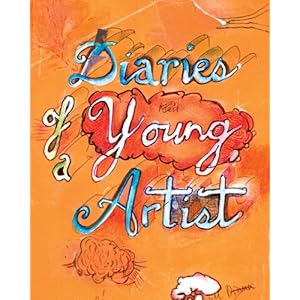
Diaries of a Young Artist

0 Comments


Dear Diary,

Do you remember I once read Letters to a Young Artist? A great book. It contains twenty three letters by established artists, written in response to a letter from a fictional "young artist" asking for advice. The young artist's letter is not published, so the task of reconstructing it is left to the reader. This makes reading Letters a treasure hunt. The effect is reinforced by the letters themselves, which contain moments of frankness and intimacy, nuggets offered by the older artists to their younger selves. The resulting mixture of personal history, practical advice, and considered reflection make this a classic small book.

When I finished Letters, I wrote on my blog that "I would really love to find a book that contains text by artists before they become established." When I saw the sequel, Diaries of a Young Artist, I eagerly purchased it.

I was disappointed.

The second book is far less compelling that the first. It is well written, but the book fell flat. There were few "take homes." It would be easy to argue this is because younger artists have less to say than established artists, but I don't accept this. I think the editors got it wrong.

For Diaries, the editors asked the younger artists to contribute "dear diary" entries - and there's the nub. Many of the artists take the project literally, and write about their daily routines. Consequently, where first book was polemic, the second is prosaic. The trips to cafes, openings, and the doctors office are all very well, and many of the artists write enjoyably. Terrence Koh's entry is hilarious, or offensive, take your pick. But there are far fewer of the reflective and intimate moments found in Letters. The "dear diary" form is too open ended. It did not challenge the artists enough to address specific issues or to reflect on what art is or what it is to be an artist.

Another issue is that the diary form is exhausted by the web, which, with thousands of free art blogs, does diaristic better and cheaper, with video too. A book of diary entries must to do additional work to establish value - but this book contains no additional essays or information, not even bios of the artists or pictures of their work (far more significant in this book than the first, since the included artists are not yet household names).

And a third issue with the diary form. In Letters I believed the established artists wrote in order to help younger artists. It was a generous gesture, so I approached the book sympathetically. But publishing diary entries hints at self promotion more than altruism. There is nothing wrong with this (it is certainly one reason I blog). But it alters how I respond to the book. It sets a higher bar. I found myself more cynical. I expected to get my fifteen dollars worth.

I was primed for disappointment.

I finished the book blaming the editors. I wish they had instead reversed their original project: why not arrange for an established artist to write to younger artists, perhaps telling a story or two and relating issues from their career, and asking the younger artist to propose alternatives, or dream what a career in art could be. The same artists presented in this volume would, I am certain, have responded very differently to this call. The editors, distracted by treasure, forgot the treasure hunt.

Mar 12, 2010

Chus Martinez

0 Comments

"The best aerobics for the brain is to see exhibitions" - Chus Martinez

Today: a presentation at CCA by Chus Martinez, currently chief curator of Museu d'Art Contemporani de Barcelona (MACBA), previously the director of the Frankfurter Kunstverein. The talk was refreshingly rich and cerebral. In contrast to Carolyn Christov-Bakargiev, a fan of randomness who claimed curating is like being a traffic director, Martinez rooted her museum curating in the conceptual, saying at one point "the museum can only be about one thing: research." For Martinez, curatorial research is a vehicle for revisiting the near past, not for nostalgic purposes, but rather to bring it to the present and ask how it can move us now.

To expand this idea, Martinez turned to philosophy, starting with a YouTube clip of Heidegger from 1969, discussing the future of thought:

"No one knows what the fate of thinking will look like. In a lecture in Paris in 1964, which I did not give myself but was presented in a French translation, I spoke under the title: "The End of Philosophy and the Task of Thinking." I thus make a *distinction* between philosophy, that is metaphysics, and thinking as I understand it. The thinking that I contrast with philosophy in this lecture—which is principally done by an attempt to clarify the essence of the Greek "aletheia" (unhiddenness) — this thinking is, compared to metaphysical thinking, much simpler than philosophy, but precisely because of its simplicity it is much more difficult to carry out. And it calls for new care with language, not the invention of new terms, as I once thought, but a return to the primordial content of our own language, which is, however, constantly in the process of dying off.

A coming thinker, who will perhaps be faced with the task of really taking over this thinking that I am attempting to *prepare,* will have to obey a sentence Heinrich von Kleist once wrote, and that reads "I step back before one who is not yet here, and bow, a millennium before him, to his spirit." - Heidegger

Martinez said we are still trapped in the logic of dialectical thought. The dominant notion of culture remains Adorno's, wherein culture is understood in negative terms as a dialectical defense against the market and capitalism. Click. In this mindset, culture is whatever is antagonistic towards the market, and the museum acts as a shelter, protecting culture from the market.

Taking up Heidegger's quest, Martinez asked how we can move beyond dialectical logic. "What is this future of thinking? How does it work? What do we want with all that?"

One offering is relational art. In an insightful analysis, Martinez noted that the arrival of relational art, identified in Bourriaud's book Relational Aesthetics, was not an accident: relational art arose as a response to the fall of communism. Click. We cannot separate relational art of the 1990's from the collapse of the Berlin wall since, in the post-communist era, artists sought a less negative model of culture, one that embraced participation, a kind of enthusiasm, "a new happiness in a landscape of grayness," "lets do it together."

Martinez again raised Heidegger's challenge: how do we move beyond this enthusiasm, to a future of thinking?

She cited as one inspiration Deleuze's last book, Pure Immanence (see review). Martinez noted that traditional philosophies based on the transcendent produce a divide: Some objects are so powerful that they overwhelm thought, producing only experience. Click. With other less powerful objects, thought is superimposed on the object, but transcendent to it - Martinez referred to this as the October syndrome. Deleuze offers a third possibility, pure immanence - not thinking about (i.e. superimposing thought on an object) but thinking through an object.

Deleuze's theory aims to be an empiricist's riposte to rationalism and idealism. Deleuze argues that underlying rational thought there is a plane of immanence that unifies concept and experience. But Pure Immanence is evasive and incomplete. Click. What does it mean to "think through", for example?

Martinez offered imagination as a way to formulate the conduit between object and thought. Martinez distinguished imagination from fantasy. Where fantasy is static, like a frozen image that you hold in your head, imagination is active. It is speculative.

Martinez she said a freaky question is: can you imagine talking about love but using a technical language, not the language of love? Can you superimpose a logic within another logic? With this, Martinez turned to writing. She claimed writing is an immanence exercise. Fiction, she said, empowers imagination, it is an expanding act. She told the story a studio visit she had with an artist who mentioned having written a novel. This spiraled into a project (a project, she noted, not an exhibition) where she collected novels by over 200 artists and presented the collection in a reading room at MACBA. Click. Click. These novels are not published literature and therefore become something else - a "power weapon" to open a space for speculation. Someone asked "who reads them?" Martinez said "nobody," but quickly countered that she had read all the books in the collection.

*

As an artist, I found it curious to hear an art curator linger on writing. For a while it blotted out everything else, distracted as I was trying to grok how a collection of fiction which nobody reads could be the future of thought. Where does this leave art?

Later, revisiting (to use Martinez's word), I thought about the ground that was covered. What Martinez presented was a well-rehearsed theoretical track from the Frankfurt school - Adorno and Heidegger - to Deleuze. As Martinez noted, these are not new ideas.

Click. What was much less rehearsed in Martinez's talk was her use of media. Throughout the hour, Martinez showed images, sometimes pausing on one image for a long time, other times flicking through several images quickly, almost casually. Sometimes the images synchronized with what she was saying, other times not. On occasion she looked at an image and explained what the image showed. Other times not. At one point she opened a PowerPoint deck with 150 slides and started clicking through the images. "Powerpoint slides all look the same" she said, shuttling through ten images of past shows. "This was our John Cage retrospective."

And on Heidegger, Martinez showed an 8 minute video in German with no English subtitles. Afterwards, she pointed out that she knew the words by heart, but wanted to read them to us - so she opened a Word document and read the English translation. In a short moment, then, a YouTube clip; Martinez's citation of her memory of the text; a Word document showing an English translation of the text; and her performance of the Word document out loud.

This was new for me. Curators often have a reverential attitude towards images, and are more casual towards words. Martinez was the opposite. She signaled that media images are not the art, could never be the art. Media and memory fold together in complex ways that cannot be trusted. Language is more reliable.

I left with two questions.

First, although Martinez argued for expanded thought, I felt in many ways her presentation remained hermetic, focusing on the French and German thinkers who appear in all art curricula. To expand thought, isn't it now time to move to the diaspora of thought beyond the tradition of the European? I wondered about cognitive philosophy, particularly recent research on embodied cognition, or tribal thinking, as powerfully articulated by Donna Haraway.

Second, although Martinez flirted briefly with pure immanence, her presentation was fundamentally an epistemological enquiry - her central question was "what about the future of thought?" She stressed the individual thinker, and talked about alternative logics. But why thought, logic, language? What about the ways that art performs as phenomenological, ontological and communitarian activities? These today seem far more significant, yet remain less represented than epistemologies of art.

At one point, Martinez said "The best aerobics for the brain is to see exhibitions." I think this sums it up. It is not enough to see slides of exhibitions in a lecture hall, to hear words or see images. Media produces alienation. Instead, we must carry our brains (literally, not only our minds) to the exhibition itself. Doing so produces aerobics, a group body-brain activity. The importance of community and body were implicit throughout Martinez's talk, but rarely foregrounded.